
Payment · One layer of the platform
Every way your customers want to pay.
Card, contactless, QR, meal cards, İstanbulkart and CSC closed-loop credit — accepted through one certified terminal and one platform. Payment is where DMS started in 1999; today it is one layer of the platform, not the product.


Accepted on the machine, through one terminal — the full list, grouped, is below.
Brands accepted
Four payment worlds, one integration
The same terminal speaks every scheme your customers carry — grouped here into the four families it actually integrates. On the machine that is the NEXGO UN20 (sold in Turkey as Pavo): one certified device, every brand below.

-
Card networks
Contactless, chip and magstripe
-
-
Meal cards
Turkey's meal-voucher ecosystem
-
-
Transit cards
City transit stored value
-
-
Closed-loop credit
Corporate CSC and campus wallets
- CSC
-



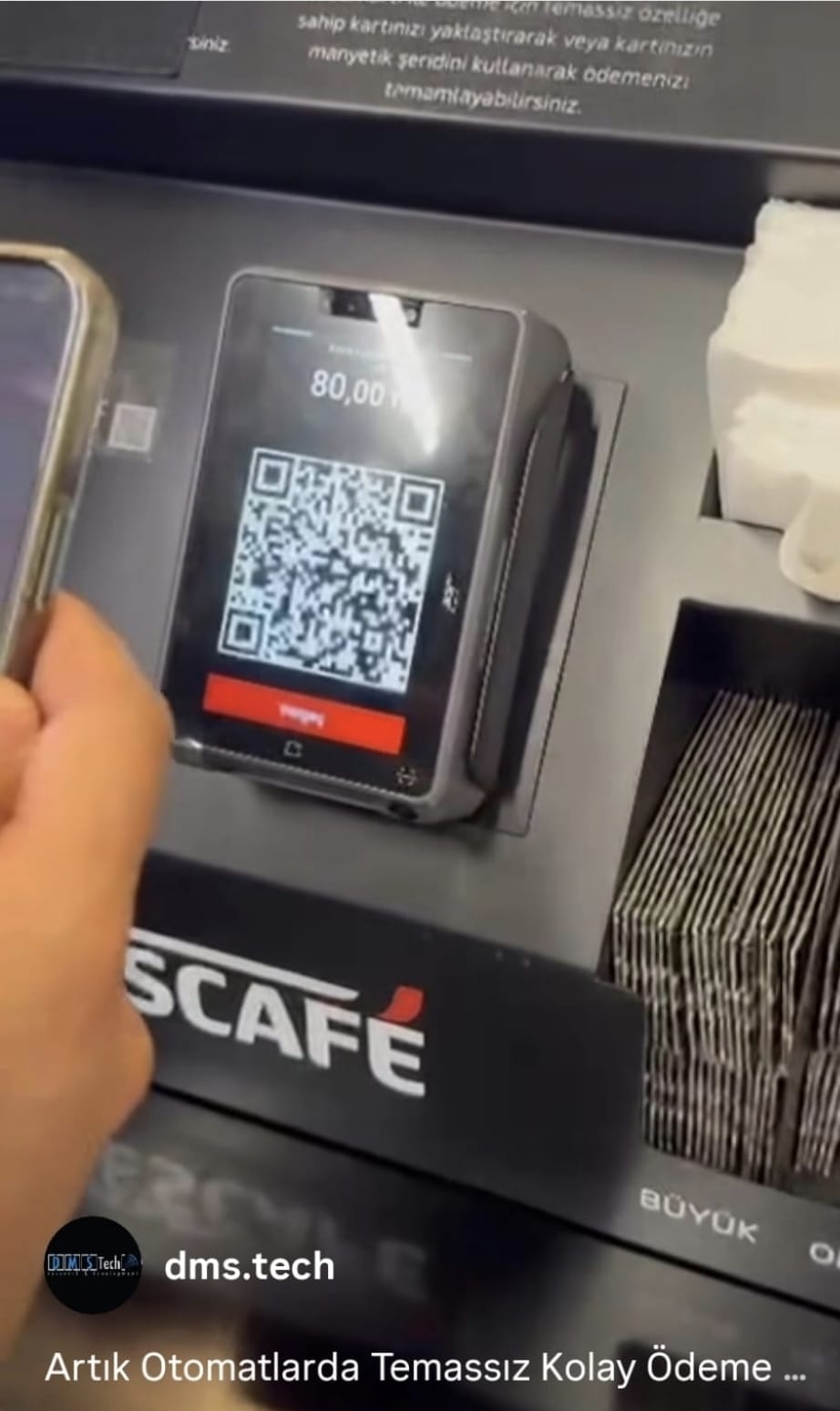
The device
What is actually on the machine
Not a category description — the terminal we fit, with the manufacturer's own figures. If you are writing a tender or cutting a door, these are the numbers you need.
- Model
- NEXGO UN20 · sold in Turkey as Pavo
- Operating system
- Android 11
- Processor
- Quad-core Cortex-A53, 2.0 GHz
- Memory
- 2 GB RAM · 8 GB storage · microSD to 128 GB
- Display
- 5" HD 1280×720, capacitive multi-touch
- Card reading
- Magnetic stripe · chip · contactless (NFC)
- Code reading
- QR and barcode, 1D and 2D
- Security certification
- PCI 6.x · EMV L1 & L2 · EMV CL1 · PayPass · payWave · QPBOC L1
- Machine interfaces
- MDB master and slave · dual RS232 · digital I/O
- Other interfaces
- USB-A and USB-C · Ethernet · HDMI · SMA antenna
- Connectivity
- 4G/3G/2G · Wi-Fi 802.11 a/b/g/n/ac (2.4 & 5 GHz) · Bluetooth 5.x · GNSS
- Operating temperature
- −20 °C to +70 °C (storage −30 °C to +80 °C)
- Humidity
- 10–95 %, non-condensing
- Ingress protection
- IP65
- Impact resistance
- IK10
- Surface
- Weather-resistant material — 1,500-hour sunlight exposure test
- Approvals
- CE · RoHS · PTCRB · BKM TechPOS · ATEX — the manufacturer lists ATEX without a zone, category or temperature class
- Size
- 146 × 101 × 57 mm · cut-out 108.7 × 86.4 mm · 620 g
- Power
- 12–48 V DC or 19–30 V AC, depending on configuration
These are the manufacturer's published figures, not our measurements. We deploy the device; NEXGO builds and certifies it. Manufacturer's specification
Two of those rows are codes rather than numbers, and they are the ones that decide whether a machine can stand outdoors. Here is what they mean.
It keeps working through a Turkish winter and a sealed cabinet in August
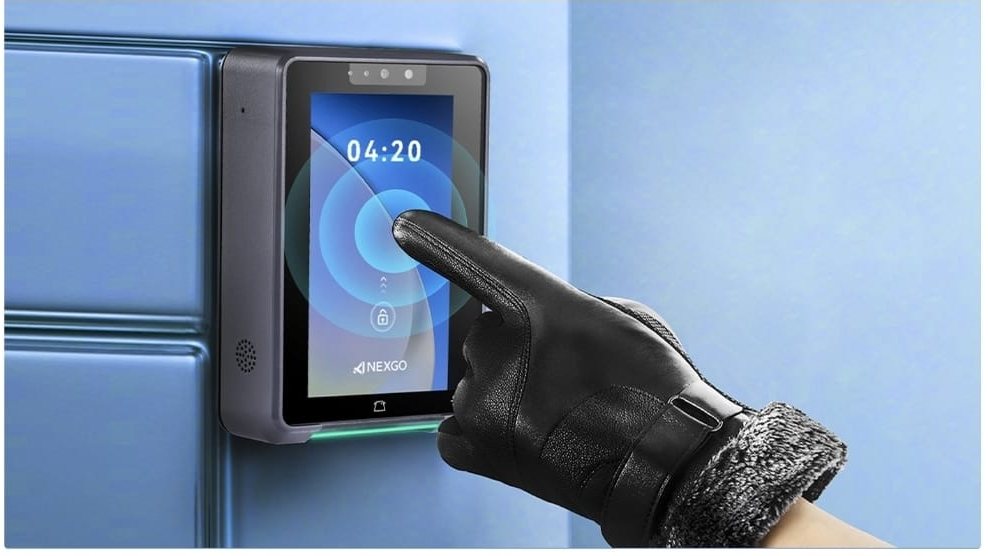
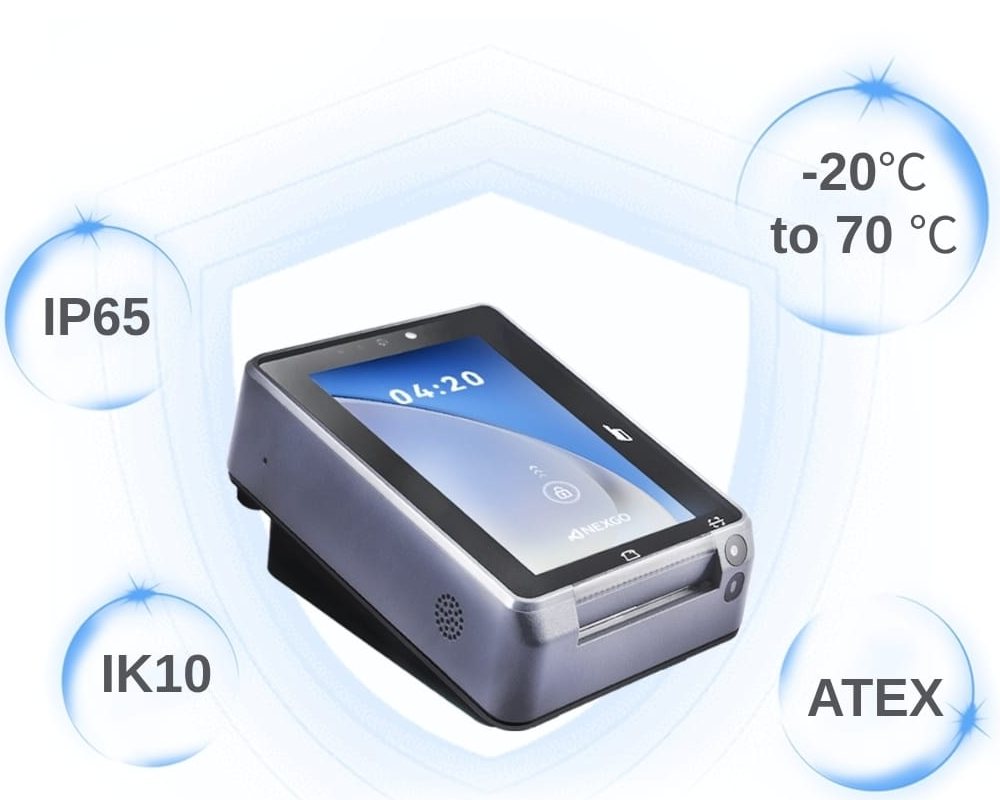
One honest limit: these ratings belong to the terminal, not to your finished machine. Protection is only as good as the cut-out it sits in and the gasket behind it — an IP65 device mounted badly in a machine door does not make the door IP65. Ask us how it is mounted, not just what the device is rated.
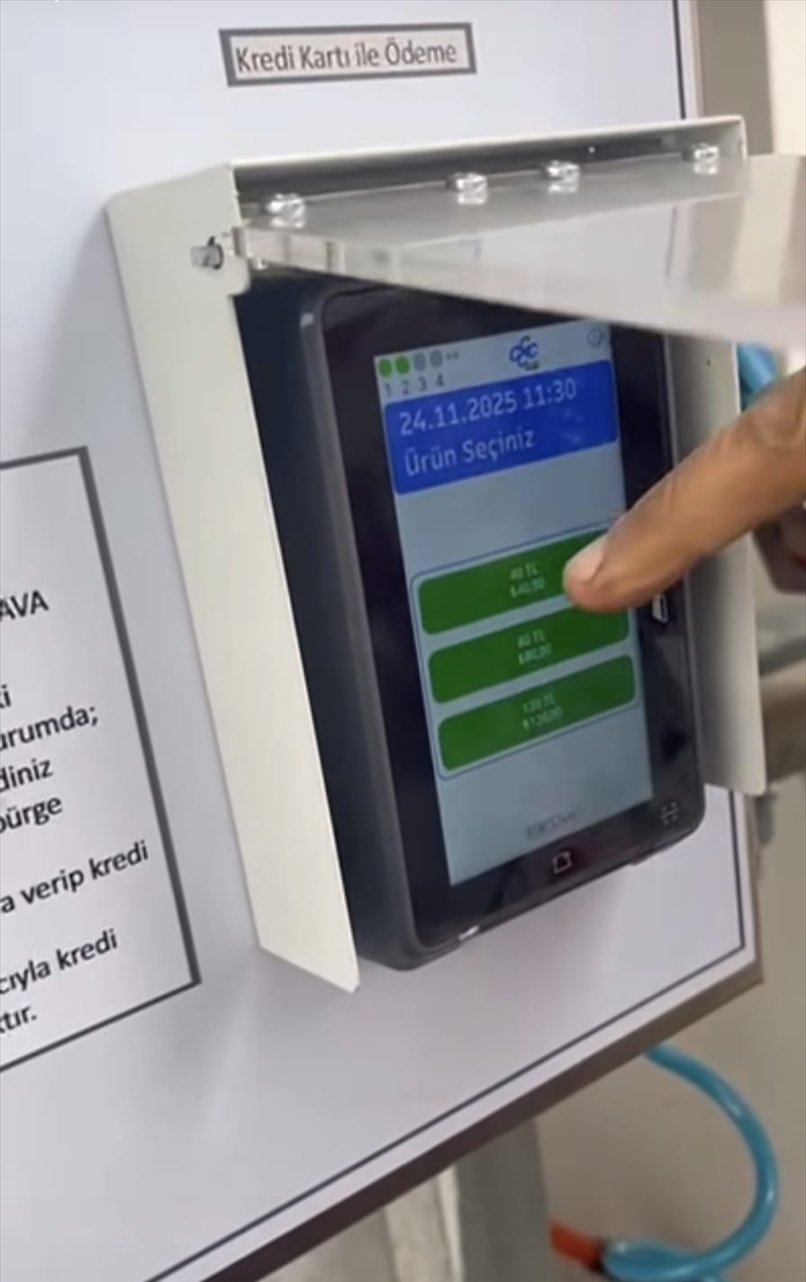
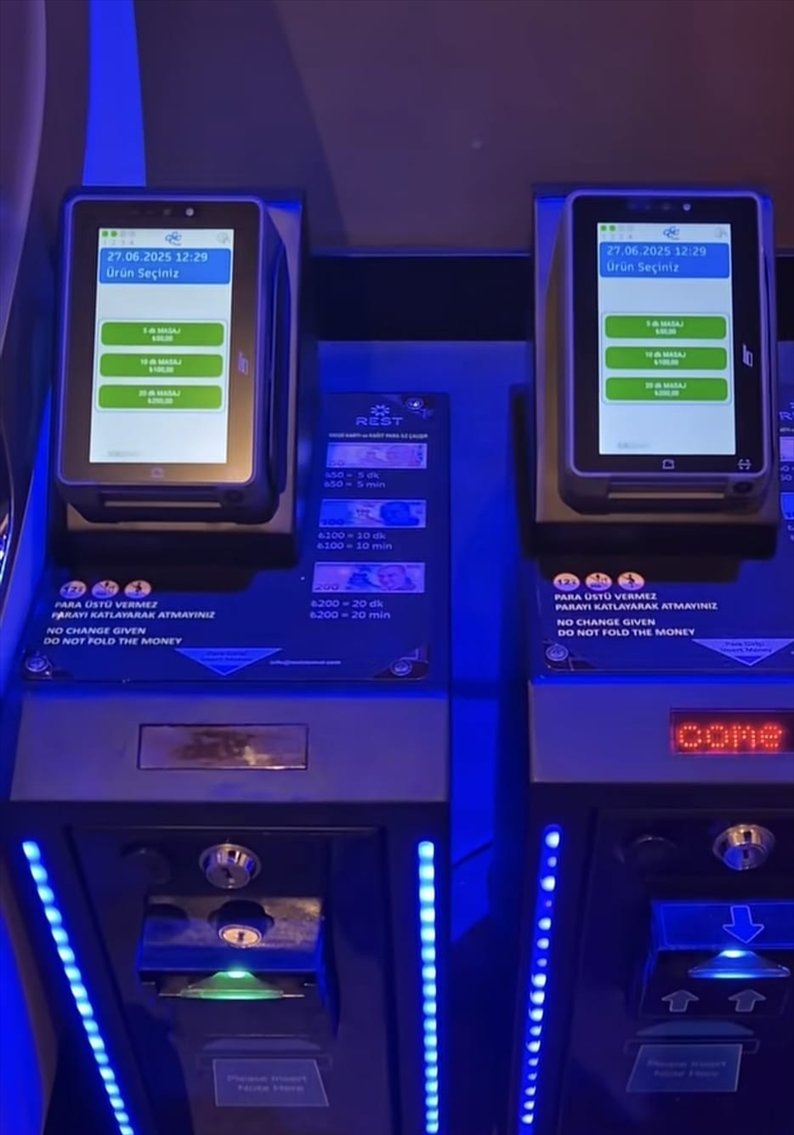
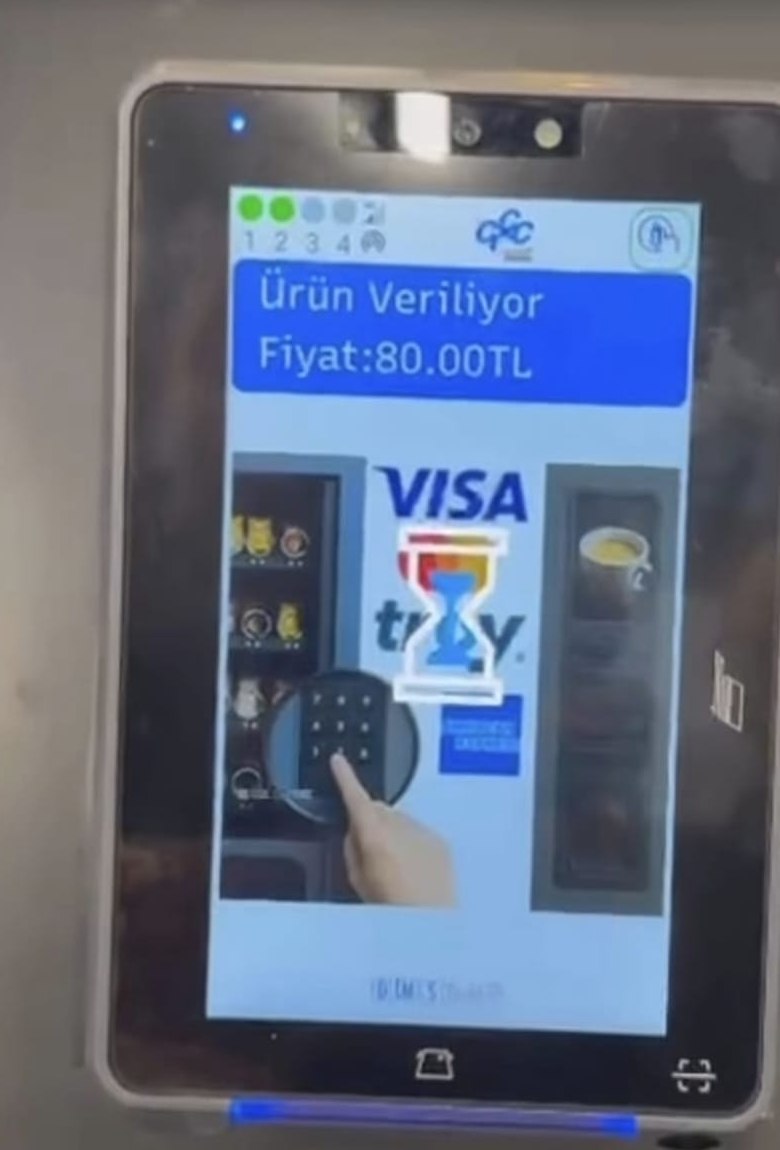
Our own photographs, from live installations. Not renders and not the manufacturer's studio shots — the device where it earns its keep.
What the terminal accepts
One terminal, every method that matters
A single certified terminal on the machine takes the full range of payment types Turkish and international operators need — so a customer never walks away because their method was not supported.
Meal-card schemes accepted
- Multinet Up
- Edenred
- Pluxee
- Setcard
- MetropolCard
- Macellan
- İstanbulkart
Since 1999
Payment is where the engineering started
DMS put the first online card payment on a vending machine in 1999. Every acceptance method since has been engineered in, not bought in — which is why payment on our platform behaves like part of the machine, not an add-on stuck to the side.
Twenty-five years of acceptance, every method engineered into the platform — not a reseller's terminal list.
Payment in context
Acceptance is one layer — not the whole story
Taking the payment is the easy part. The value is what sits around it: the same Hero Nexus that authorizes a card also drives the machine and reports telemetry, and QuadC reconciles every transaction across the fleet.
-
Payment on the same edge as control
Hero Nexus takes the payment and drives the vend or the PLC in one flow, so a paid transaction always maps to a real dispense.
-
Every transaction reconciled in the cloud
QuadC records each sale against its machine, method and time — revenue, refunds and reporting for the whole fleet in one place.
-
Offline-first acceptance
Payments authorize and vends complete even when the network drops, then reconcile the moment the link returns — nothing is lost.
-
Visible the moment it happens
Every payment lands in HERO with its machine, product, method and time. Sales, alarms and statistics open in a browser — from a phone in front of the machine or a desk in the office — with nothing to install.
-
What happens once it is fitted
Two separate things, and they should not be confused. First, substitution: where cash and card sit on the same machine, 80-90% of sales go through the card — we see that in our own dashboard. Second, growth: operators report that total sales at the same spot, on the same machine, rise as well — lately by 60-70%. That figure is theirs, not ours: we hold no data from the machine's cash-only period, so we do not measure the increase. Many operators eventually remove the coin mechanism and note validator altogether; nobody takes a thing out of a machine while it is still selling. Where cash stays, we keep servicing those units — so the decision remains yours.
Accept every method, on the machines you run
Tell us your machines and the methods your customers use. We will show you how the platform takes payment — and what it does with every transaction after. On machines that take card, 80-90% of payments go through it — and operators report that sales on the same machine grow as well. Whether cash stays is a decision you can make later, on your own numbers.